


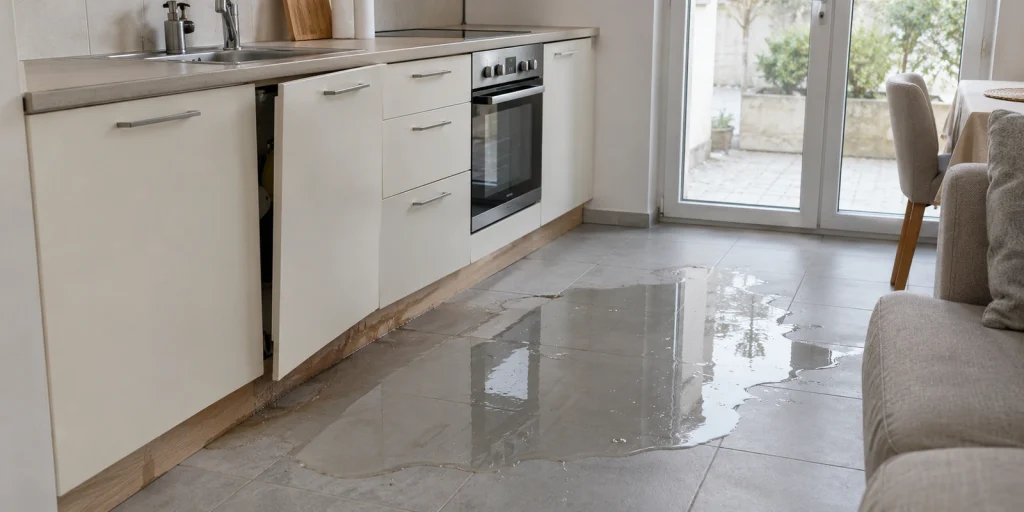
If you have a home insurance policy, it is easy to assume it also covers you as a holiday let owner. The problem is that an ordinary home policy often does not allow for paying guests. Only when a guest falls on the steps by the pool or the bora lifts roof tiles in the middle of August do you find out what the policy really covers.
Is insurance mandatory?
It depends on how you let. If you let as a private individual, with a licence for providing accommodation in a household, the Croatian Hospitality Act does not require any compulsory insurance. Insurance is not among the obligations of private renters.
It is different if you run the house or apartments through a sole proprietorship (obrt) or a company. Under the law you are then a hospitality business, and a hospitality business must insure guests in its accommodation against the consequences of accidents (Article 10, paragraph 1, point 9). The fine for failing to do so is 330 to 2,650 euros for the company or sole proprietor, and a tourist inspector can collect 190 euros on the spot. This also affects some foreign owners who let on Krk through a Croatian company, which for citizens of non-EU countries is often the only option (more in our guide for non-residents).
What matters is who provides the accommodation service and in whose name the licence is issued. If a tourist agency sells your accommodation, that does not make you a hospitality business: a private renter remains a private renter, with the same obligations.
But even where nothing is compulsory, the risk is the same. If a guest is injured because a property was poorly maintained, they will claim compensation from the owner, and one serious fall at a house with a pool can cost more than several seasons of income.
Why an ordinary home policy is not enough
A home policy is written for a family that lives in the house, not for a house that a hundred strangers pass through every season. You can see this in the policy terms, which hardly anyone reads.
Take two examples from published terms. In Allianz's terms for private liability insurance, liability for accommodating guests is covered only if specifically agreed and an additional premium is paid. The same terms exclude liability for any part of the house used for an occupation. In the household contents terms that Croatia osiguranje sells through HPB bank, household contents are items used by the household exclusively for private purposes, while items in a flat or house let to tourists are a separate category.
In other words, if you have not told your insurer that you let, you may have no cover for exactly what is most likely to happen to you. When taking out or renewing a policy, always say it plainly: I let to tourists, so many units, so many beds, there is a pool. Ask for it to be stated in the policy.
What a holiday let policy should cover
Most of the larger insurers in Croatia have special packages for holiday apartments and rental houses. The names differ, but a good policy covers these seven things:
| Cover | What it covers | What to watch out for |
|---|---|---|
| Building | House, outbuildings, pool, terraces, pergolas, fences | The sum insured must match the cost of rebuilding, not the market price of the house |
| Apartment contents | Furniture, appliances, crockery, bed linen | The policy must expressly include the contents of a property let to tourists |
| Liability towards guests | Guest injuries and damage to their belongings for which you are liable | Level of the limit; pool and hot tub expressly included |
| Damage caused by guests | Things broken, smashed or ruined during a stay | Limits are usually low and come with an excess |
| Loss of rental income | Lost bookings while the property is being repaired | Which risks trigger it and for how long it pays |
| Guest accident | Payment to the guest after an accident, regardless of your fault | A legal requirement for sole proprietors and companies |
| Earthquake | Earthquake damage | Almost always an additional risk that must be agreed separately |
When it comes to damage caused by guests, keep your expectations realistic. Under the terms of the GRAWE Apartman Plus package, for example, damage a guest causes to the property is covered up to 500 euros per incident, with a 100-euro excess and no more than 1,000 euros a year. According to Euroherc's 2025 product information document for DOMOS Rent, the limit for damage caused by a guest is 995.42 euros, also with a 100-euro excess. With GRAWE, compensation is also limited to the current value of the damaged item, so a television bought five years ago will not be paid for as new. For larger damage the rule still applies that the guest pays, and a deposit remains the first line of defence (more on this in our article on guests with pets and damage).
Loss of rental income is the cover most often overlooked, yet on the coast it makes the most sense. A pipe bursts in July, the apartment is unusable for three weeks, and the cancelled bookings are worth more than the repair itself. Terms vary widely here. Under the same GRAWE package, rent is reimbursed for a maximum of one month (up to six months after a fire), and the 3,000-euro limit applies per incident and also as the total for the whole year, unless otherwise agreed. Costs that did not arise because the guests did not come, such as cleaning, utilities and agency commission, are deducted from the lost rent. Euroherc's DOMOS Rent package also covers the renter's loss of profit when damage to the property means you cannot take guests.
Bora wind, earthquakes and underinsurance
On Krk, three things most often decide whether a claim is paid in full, in part or not at all.
Bora. Insurers usually define a storm as wind of 17.2 metres per second, or 62 kilometres per hour (force 8 on the Beaufort scale) or more, and some insurers as 60 kilometres per hour. Reports from the meteorological service are decisive for establishing the speed. Where there are none, storm-force wind is assumed if it broke branches and trees and damaged properly maintained buildings. The key words are “properly maintained”: a roof with slipped tiles that nobody has checked for years can easily become a reason for a dispute. Checking the roof and gutters before winter is cheaper than any argument with a loss adjuster.
Earthquakes. With most policies, earthquake is not part of the basic cover but is agreed as an additional risk. Airbnb's host damage protection does not cover natural disasters such as earthquakes either. If you want it, you have to ask for it.
Underinsurance. Under Article 960 of the Croatian Civil Obligations Act, if the value of the insured property at the time of the loss is higher than the sum insured, the payout is reduced proportionally. Example: you insured a house that would cost 300,000 euros to rebuild for 150,000 euros. For a 40,000-euro loss, the basis for the payout will be half, 20,000 euros, and any excess is then deducted. The proportional reduction does not apply if something else was agreed, for example “first loss” insurance, under which claims are paid up to the agreed sum. After an extension, building a pool or a major investment in furnishings, check whether the sums insured need to be increased.
Airbnb and Booking.com: what they cover and what they don't
Many owners assume the platforms protect them. Partly they do, but only for bookings made through that platform and subject to many conditions.
| Airbnb (AirCover for Hosts) | Booking.com | |
|---|---|---|
| Damage to your property | Protection up to 3,000,000 USD, but Airbnb states that this is not an insurance policy; claim within 14 days of the guest's checkout | Outside the US there is no programme covering damage to the partner's property |
| Liability towards guests and third parties | Liability insurance up to 1,000,000 USD (Zurich) | Partner Liability Insurance up to 1,000,000 USD for stays in 2026 (Zurich) |
| Not covered | Normal wear and tear, natural disasters such as earthquakes, routine cleaning | Damage to your property and belongings |
| Bookings from other channels | Not valid | Not valid |
With Airbnb, you first claim the damage from the guest through the platform, and the guest has 24 hours to respond. Only if they don't pay do you file a claim under host damage protection. Booking.com's liability insurance for 2026 applies to stays from 1 January to 31 December 2026; for later stays, check the terms in force at the time. For bookings through agencies, direct guests and other channels, the platforms cover nothing. A platform is therefore an extra layer of protection, not a substitute for your own policy.
Foreign owners: a policy from back home?
Owners from Germany, Austria and Slovenia often ask whether they can insure their house on Krk at home, in their own language. They can, but the choice is narrow. Most domestic home policies do not cover property abroad, and Zurich in Germany itself advises owners of holiday homes abroad to insure with an insurer in that country.
There are a few serious exceptions. Hiscox Germany offers Mundial Commercial, a package for holiday homes in Germany and a number of European countries, including Croatia. It is aimed at owners resident in Germany or Austria who let their property exclusively to guests. Contents insurance is the base, while the building and liability are added as optional modules. Loss of rental income is covered for properties with an annual gross rental value of up to 90,000 euros. The terms are in German. The claims rules are similar to Croatian ones: damage must be reported immediately, theft and vandalism also to the police, wind counts as a storm from force 8, and wear and tear is not covered. Slovenian owners can take out Allianz's Moj Dom package in Slovenia, which also covers houses in Croatia. The terms provide for tourist letting, but cover for guests' belongings is linked to registration in the Slovenian AJPES eTurizem system, so for a house on Krk you need written confirmation that Croatian letting and eVisitor registration are accepted.
A foreign policy makes sense if the language of the contract matters to you. With every offer, domestic or foreign, ask who assesses damage on Krk and how quickly, and whether the guest-related terms are compatible with eVisitor registration. If you run the house through a Croatian company, also check whether the foreign policy meets the legal requirement to insure guests against accidents.
When damage happens
A policy is worth as much as you can prove. The first condition is the one owners least expect: guest-related cover may depend on proper registration. The GRAWE package terms, for example, only treat as a guest a person registered with the tourist board in the prescribed way, and cover for a guest's belongings starts at midnight on the day of registration. Check what your policy requires as proof of the stay and when each type of cover begins.
For damage caused by a guest, the insurer asks for a damage report with the guest's details: full name, address, personal identification number or ID document number, and proof of registration. Draw it up while the guest is still at the property, with photos. Dated photos of the condition before the season and after each changeover are worth more than any description made later. With faults such as a burst pipe or a short circuit, limit the damage immediately, turn off the water or electricity, and contact your insurer as soon as possible. For who handles emergency call-outs on Krk, see our guide to maintenance and emergency services.
Five questions before you sign
- Does the policy state that the property is let to tourists, and for how many units and beds?
- Is the sum insured in line with the cost of rebuilding, including extensions and the pool?
- What is the liability limit towards guests, and is the pool expressly included?
- Is loss of rental income included, for which risks and for how long?
- Is earthquake included, and what is the excess for each risk?
Compare at least two offers for the same scope of cover, not just the price. A difference of a few dozen euros a year is often the difference between a policy that pays and one that doesn't. Before signing, you can check in the register of HANFA, the Croatian financial services regulator, whether the person offering the policy is an authorised agent or broker.
Amounts and limits are based on insurers' published terms and platform information as of November 2026 and may change. The obligation to insure guests is stated according to the current Hospitality Act; a new act is going through parliament. The terms of your own policy are what count.
Krk danas Editorial Team
Portal partner
Who keeps track of damage after every changeover?
For houses where the Krk Adria / Visit Krk agency arranges cleaning, the service checks the condition after each guest departure and reports any faults and damage found. The agency gathers the documentation, contacts the guest and claims compensation for the damage under the booking terms. The owner thus has local support even when not on the island.
Cooperation with owners on KrkHave a question about this topic? Write to the editorial team.
Sources
Croatian Hospitality Act (OG 85/15 to 152/24), Articles 5, 10, 30, 32 and 47
Civil Obligations Act, Article 960 (underinsurance)
Allianz: Terms for private liability insurance
Croatia osiguranje / HPB: Terms for household contents insurance
Croatia osiguranje / HPB: Terms for fire and certain other risks insurance (definition of storm)
GRAWE: Additional terms for rental houses and holiday apartments (from 8 Feb 2024)
GRAWE: Additional terms for contents in rental houses and holiday apartments
Euroherc: DOMOS Rent, product information document
Airbnb: Host damage protection
Airbnb: Host liability insurance
Booking.com: Partner Liability Insurance, FAQ
Zurich (Germany): Ferienhausversicherung
Hiscox: Mundial Commercial, facts and figures (2025)
Hiscox: Mundial Commercial, highlight sheet (2025)
Hiscox: Mundial Commercial, product information sheet (3/2025)
Hiscox press release, 3 Apr 2025: who Mundial Commercial is for
Allianz: Moj Dom, product information document (Slovenia)
Allianz: Moj Dom general terms, 7/2024 (Slovenia)
