


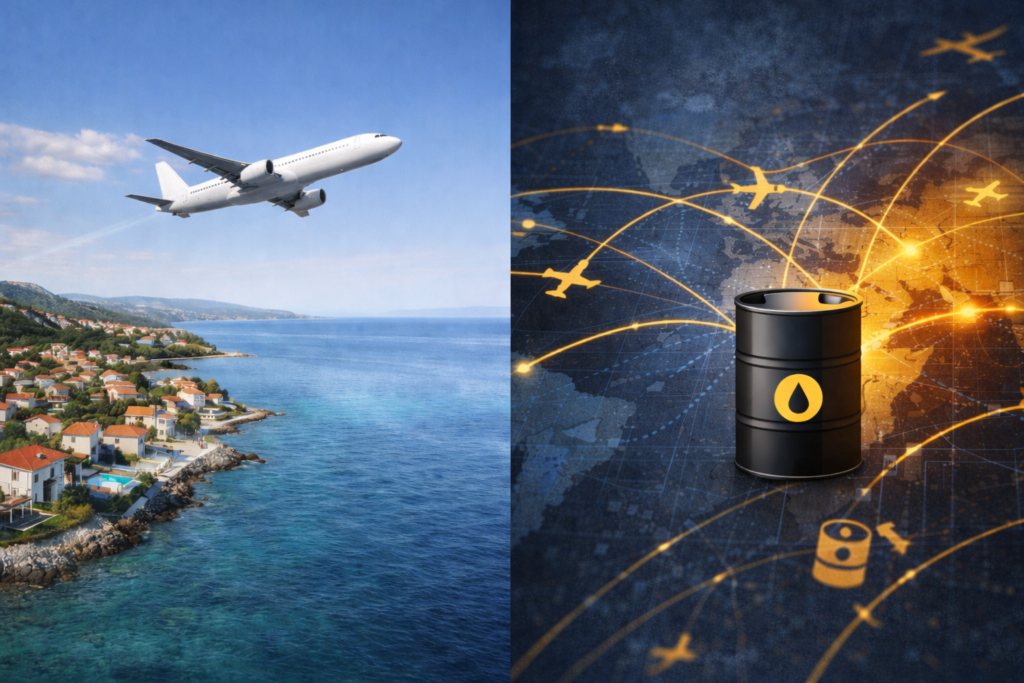
Conflicts in the Middle East have once again raised questions about global security and possible economic consequences. Although Croatia is geographically far from the war zone, such events often have an indirect impact on tourism, through energy prices, transport costs and changes in tourist flows.
Tourism is sensitive to global crises
Tourism is one of the sectors that reacts very quickly to political and security changes in the world. When a major crisis appears, some travellers become more cautious when planning their trips.
This does not mean that people stop travelling, but they often change destinations, shorten their stays or wait until the last moment to make a booking.
In the past, conflicts in different parts of the world have already shown that global crises can change tourist flows, sometimes even in favour of safer destinations.
Oil prices and transport
One of the first economic effects of major conflicts in the Middle East is usually seen on the energy market.
If disruptions occur in the supply or transport of oil, fuel prices may rise. This directly affects:
- air travel prices
- the cost of road travel
- the overall cost of tourist trips.
More expensive transport can influence the decisions of some tourists, especially in price sensitive markets.
Possible changes in tourist flows
Perception of security plays a major role in tourism. When serious conflicts appear in certain parts of the world, some tourists look for destinations they consider safer and more stable.
Croatia has often benefited from such a perception of safety in the past.
For many guests from Central Europe, the Adriatic is relatively close, politically stable and easily accessible by car, which can be an additional advantage in times of crisis.
Impact on key source markets
However, global crises often have broader economic consequences.
If conflicts continue, they can affect the economic sentiment in key source markets such as Germany, Austria or Italy.
In such situations, some tourists:
- travel more cautiously
- choose shorter stays
- compare prices more.
This is already partly visible in changes in booking behaviour, where there are increasingly more last minute decisions.
What is the real risk for Croatia
It is important to emphasize that Croatia is geographically very far from the conflict areas in the Middle East.
For most tourists travelling to Europe, the Adriatic is still considered a safe destination.
For this reason, it is realistic to expect that any potential impact of the war in the Middle East on Croatian tourism would be indirect, through economic and energy factors rather than security reasons.
What does this mean for the 2026 season?
At this moment it is too early to draw conclusions about the concrete impact on the tourist season.
Tourism depends on a large number of factors, from the economic situation in source markets to competition from other destinations and accommodation prices.
Global crises sometimes reduce demand, but sometimes they also redirect some tourists towards more stable destinations.
Conclusion
The war in the Middle East is certainly a serious global event, but its impact on tourism in Croatia will likely be indirect and limited.
Much more important factors for the 2026 season will continue to be the state of European economies, competition in the Mediterranean and realistically set accommodation prices.
Tourism is used to global crises. What usually changes is not people’s desire to travel, but the way and the moment when they decide to travel.

